Whirlwind


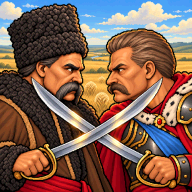 SICHA
Cossack Combat
Pixel-art sabre duels from the age of the Cossacks.
Watch the trailerComing to Android, iOS and Steam
Sabre duels
One on one, sabre against sabre. Attack high, mid or low, hold a guard, parry at the last moment and strike back. A balance meter punishes endless blocking, so you have to read your opponent instead of hiding.
Combos
Chain cuts, guards and steps into named combos. Each one ends in its own finishing move, and the longest end in a special finisher. These clips are the real inputs played through the game.


Multiplayer
No account and no server. Two phones on the same Wi-Fi, or one sharing a hotspot with the other, connect directly. Both phones run the same deterministic duel, so every cut lands the same on both screens.
On Steam, the duel goes online: invite friends through Steam lobbies.
Two nations
Fight as the hetmans and colonels of the Zaporozhian Host, or as the kings, hetmans and winged hussars of the Polish–Lithuanian Commonwealth, with Ottoman sultans and Crimean commanders among the rivals. Every hero comes in two costumes.
The roster
Every costume is its own sprite set on the same skeleton. These are rendered straight from the game. 35 heroes, 64 costumes.
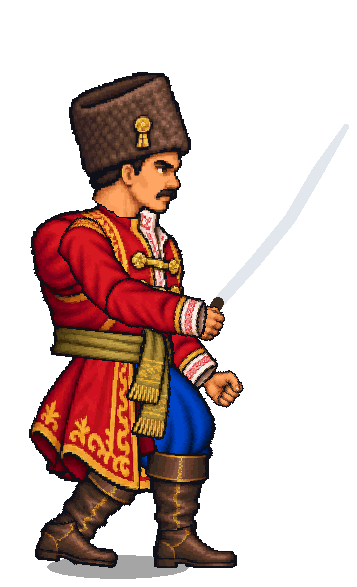
Free from the start
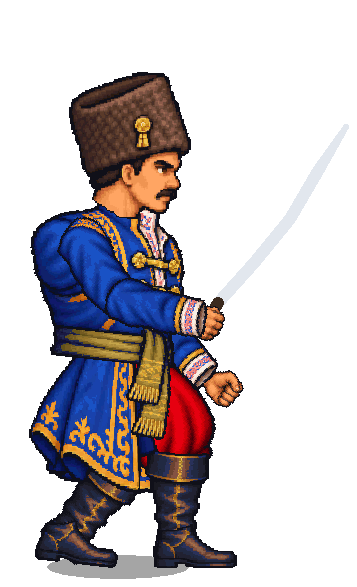
Free from the start
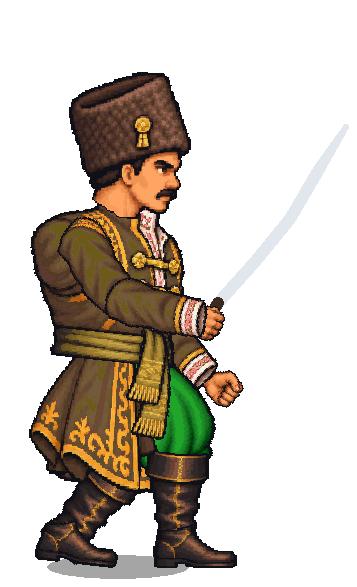
Free from the start
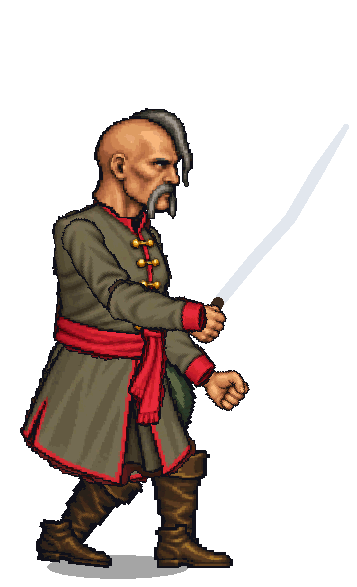
Free from the start
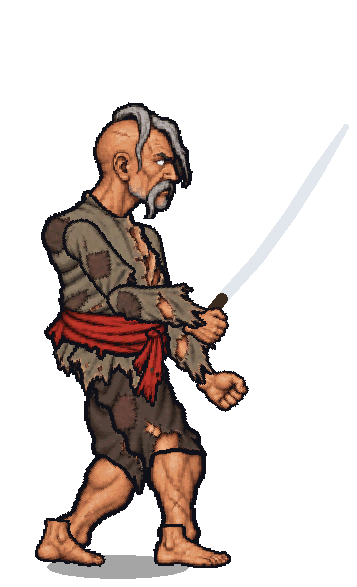
Free from the start
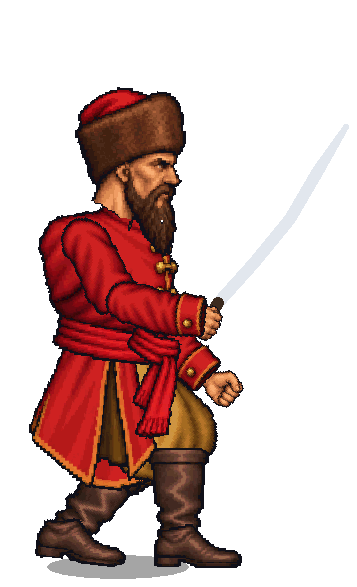
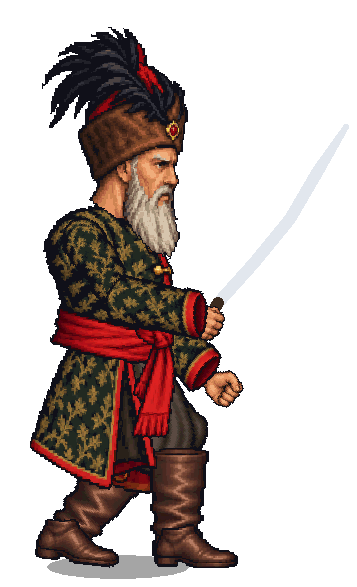
Petro Konashevych-Sahaidachny was hetman of the Zaporozhian Host. He led the Cossacks at Khotyn in 1621 and supported education and Orthodox brotherhoods.
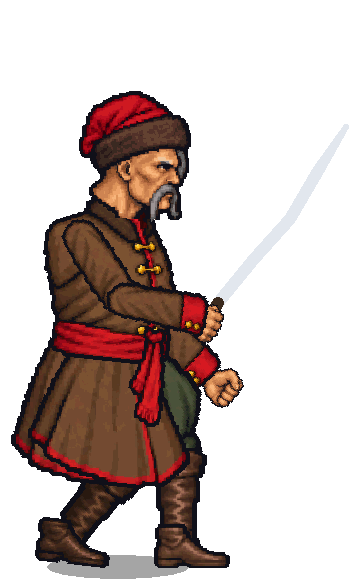
Ivan Sirko was a kish otaman of the Zaporozhian Sich. His campaigns and military fame made him a hero of many folk tales.
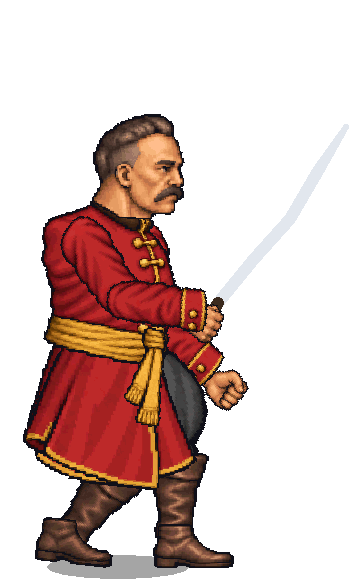
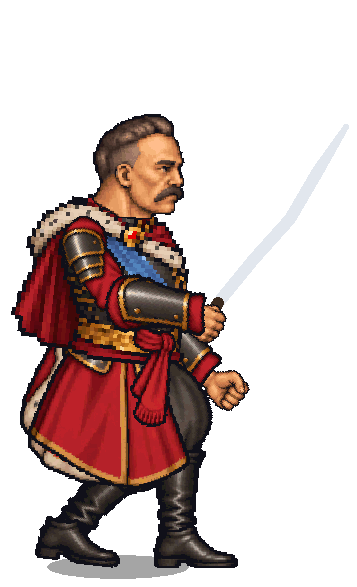
John III Sobieski was a commander and king of the Polish–Lithuanian Commonwealth. In 1683 he led the allied army to victory at Vienna.
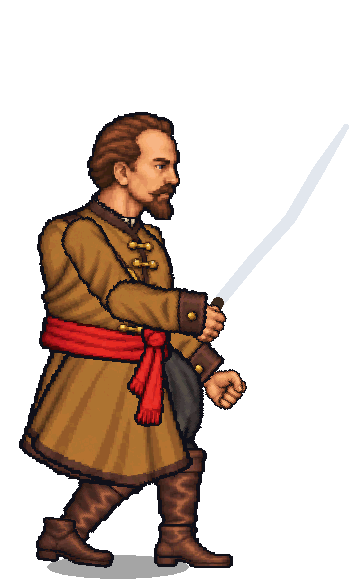
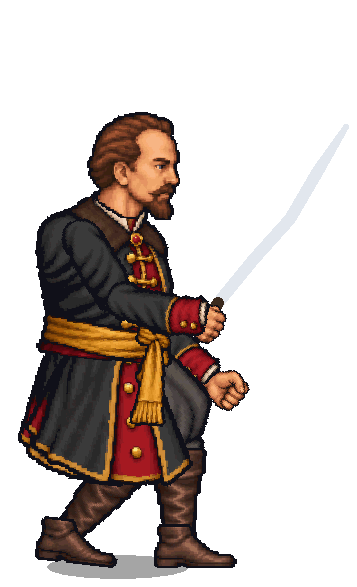
Won on the Cossack’s Path
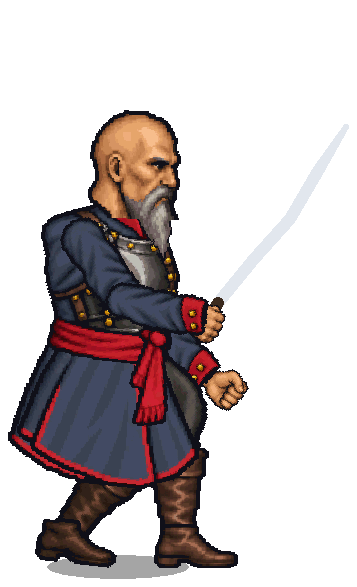
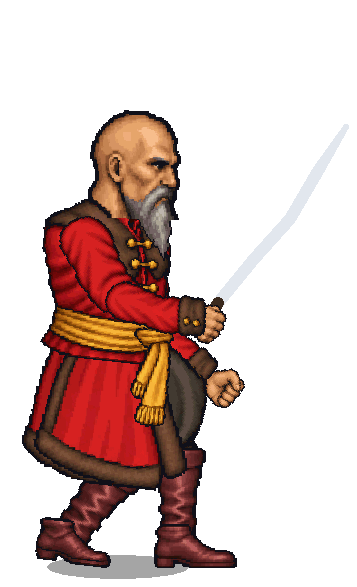
Won on the Cossack’s Path
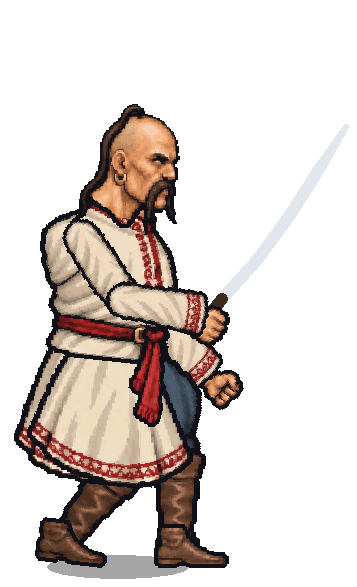
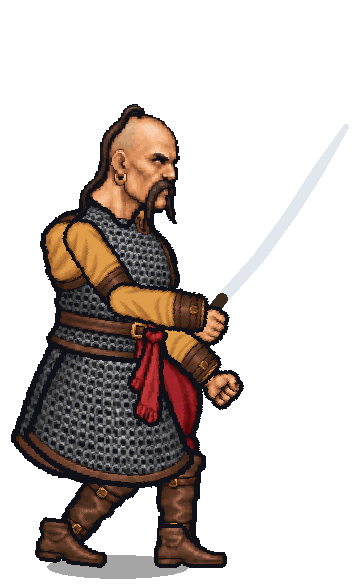
Sviatoslav Ihorovych was a tenth-century prince of Kyiv. He became known for far-reaching campaigns; the chronicle attributes the warning “I am coming against you” to him.
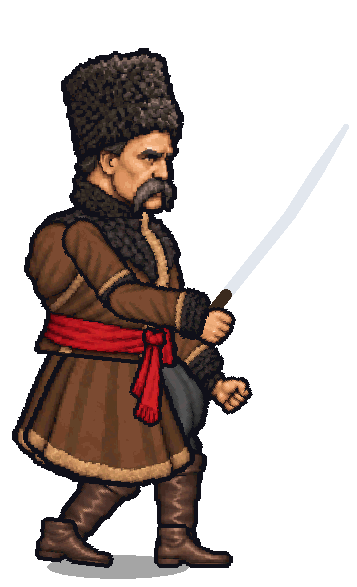
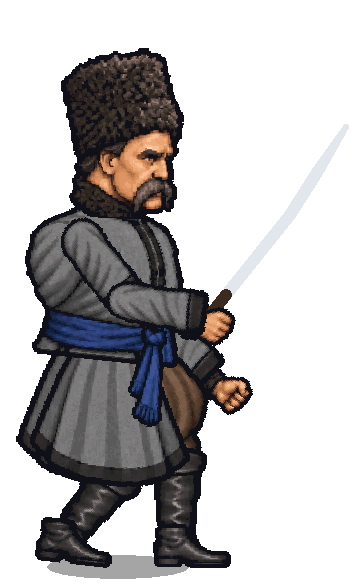
Taras Shevchenko was a Ukrainian poet and artist, the author of Kobzar. His words became a symbol of freedom; his fighter persona here is fictional.
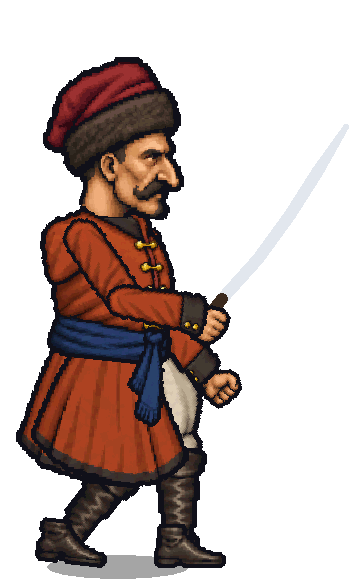
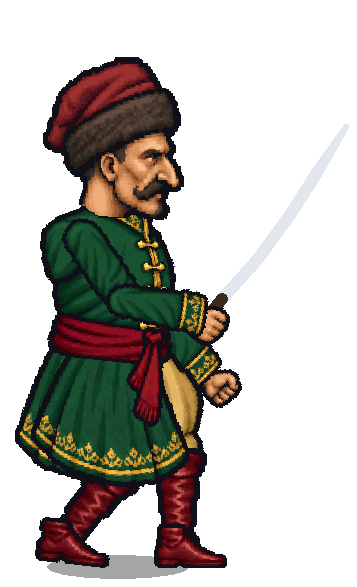
Maksym Kryvonis was a Cossack colonel and an ally of Bohdan Khmelnytsky. He took part in major battles of the 1648 uprising.
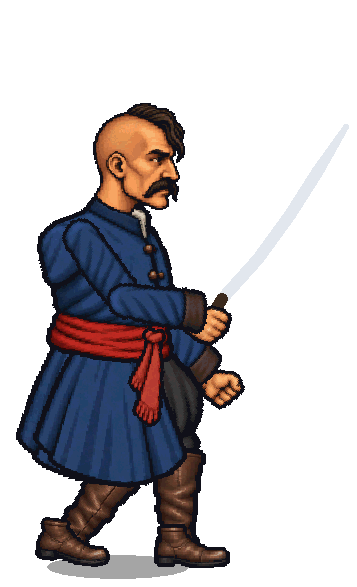
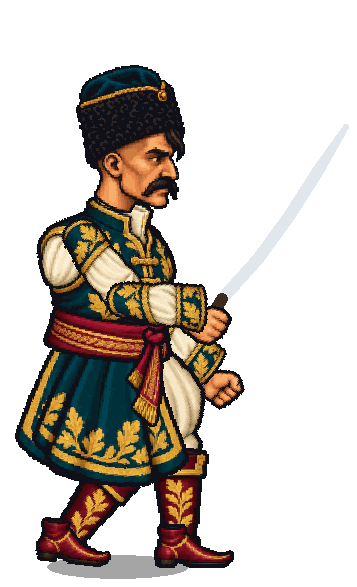
Ivan Bohun was a Cossack colonel during the Khmelnytsky uprising. He became known for defending Vinnytsia and leading Cossacks out of encirclement at Berestechko.
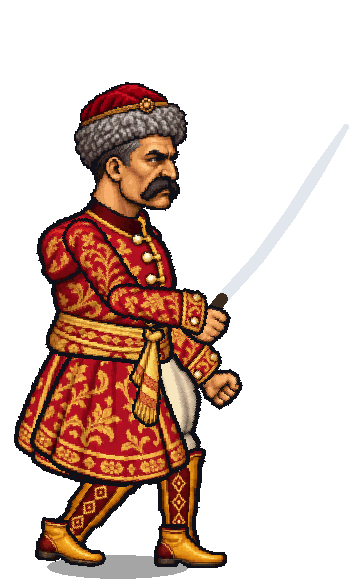
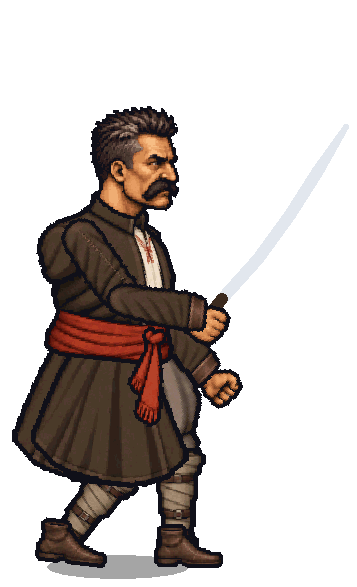
Danylo Nechai was a Bratslav colonel and a leader of the Cossack uprising. He died fighting at Krasne in 1651.
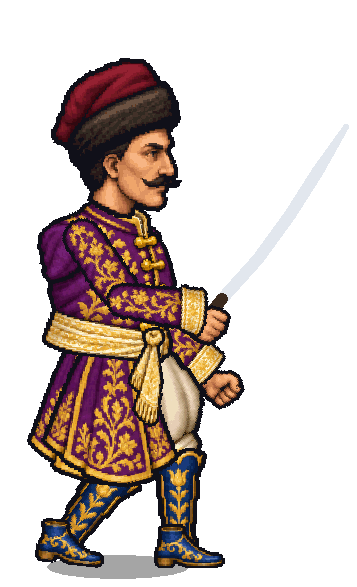
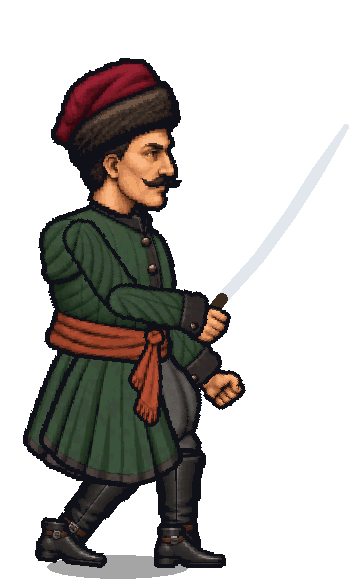
Ivan Vyhovsky was hetman of the Zaporozhian Host. In 1659 his army and its allies defeated Muscovite forces at Konotop.
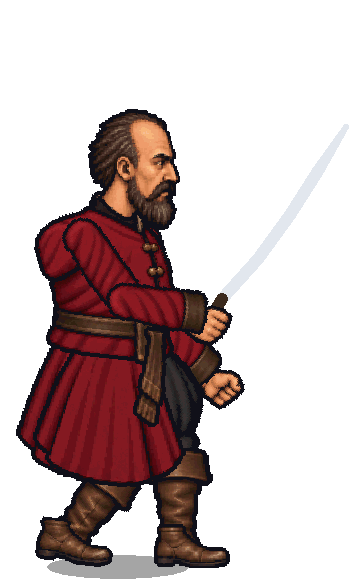
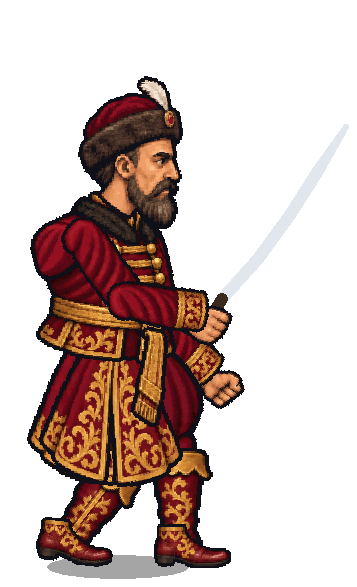
Stanisław Koniecpolski was grand crown hetman of the Polish–Lithuanian Commonwealth. He commanded armies against Sweden and on the southern frontier.
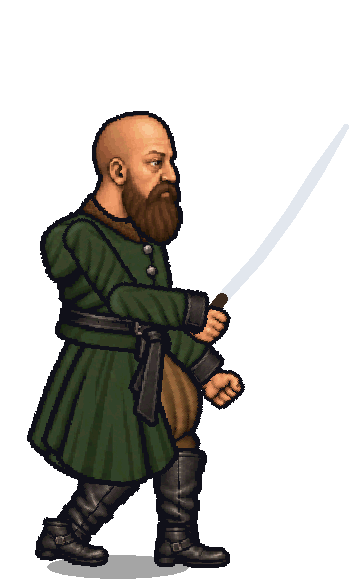
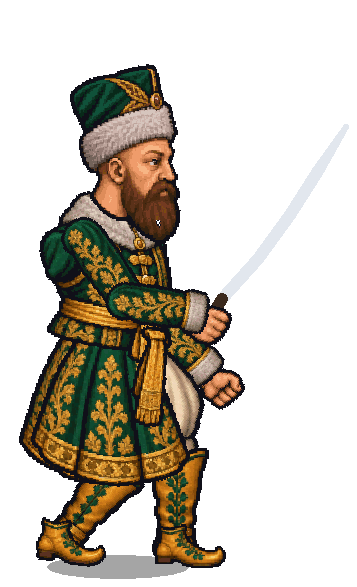
Mikołaj Potocki was grand crown hetman of the Polish–Lithuanian Commonwealth. He commanded the crown army at the start of Bohdan Khmelnytsky’s uprising.
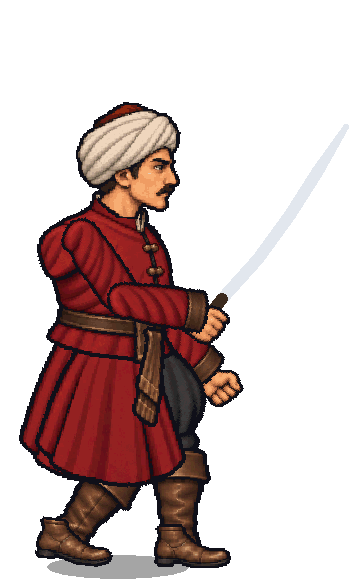
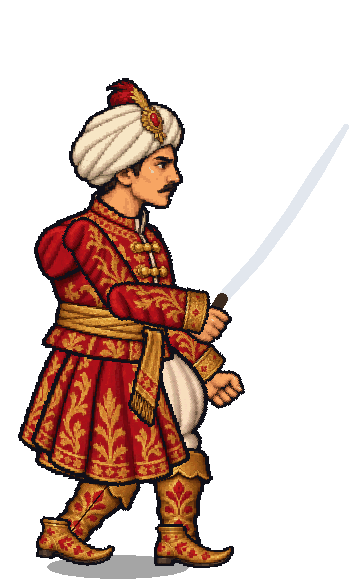
Osman II was sultan of the Ottoman Empire. He personally led the campaign that culminated in the Battle of Khotyn in 1621.
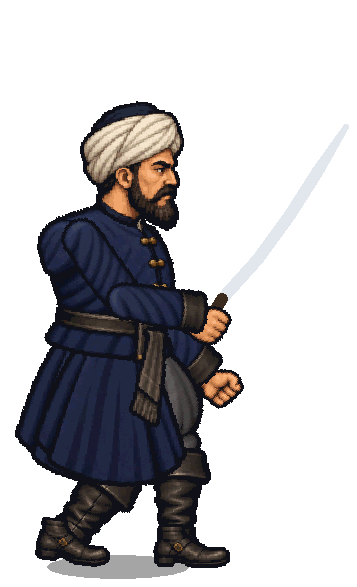
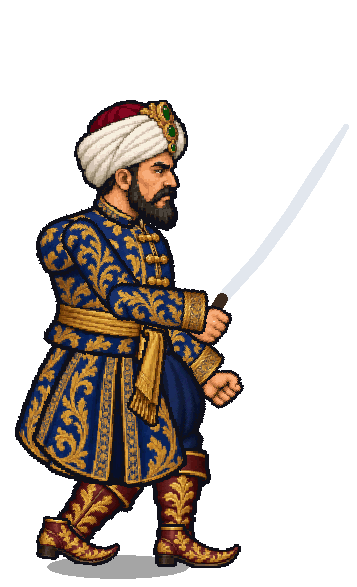
Murad IV was a seventeenth-century Ottoman sultan. During his reign the Ottoman army recaptured Baghdad.
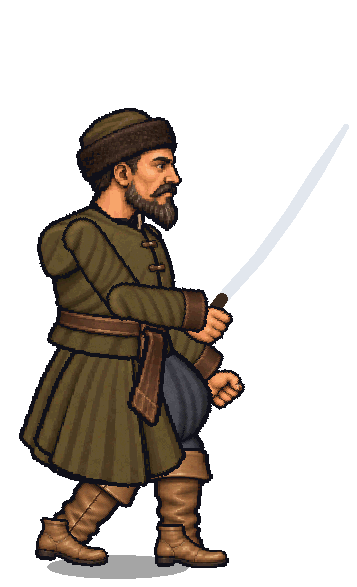
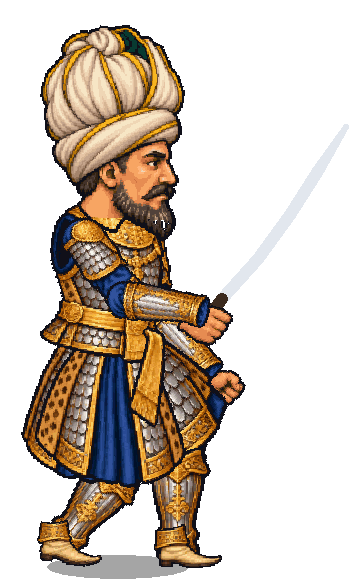
İslâm III Giray was the Crimean khan during the Khmelnytsky uprising. His alliance with the Cossacks played an important role in the war against the Commonwealth.
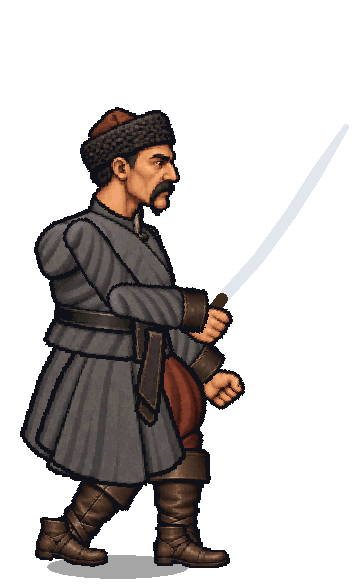
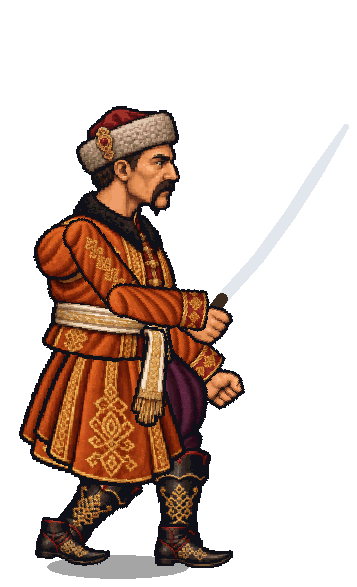
Tugay Bey was a Crimean Tatar commander. He led Tatar forces fighting alongside Bohdan Khmelnytsky’s Cossacks.
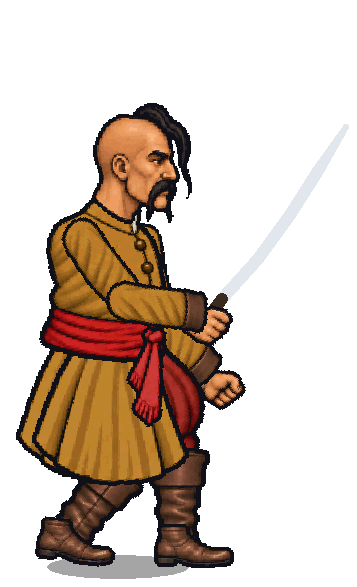
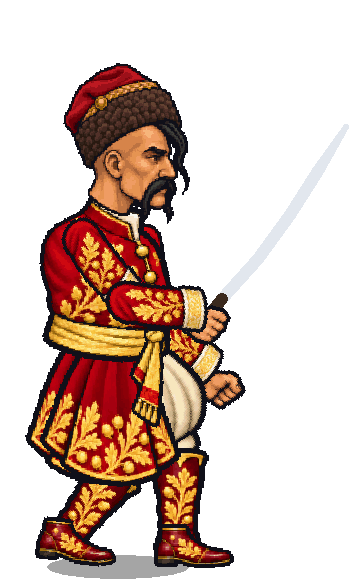
Cossack Mamai is a legendary figure in Ukrainian folk art. Paintings show him with a kobza, a horse and weapons as an embodiment of Cossack freedom.
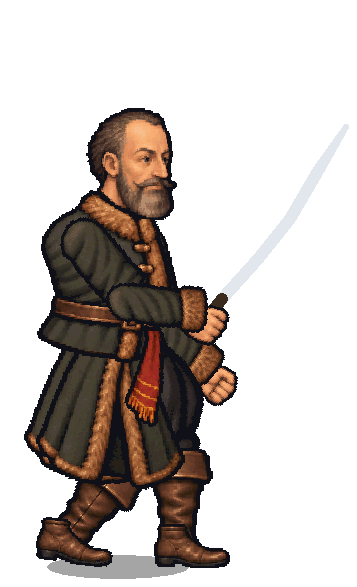
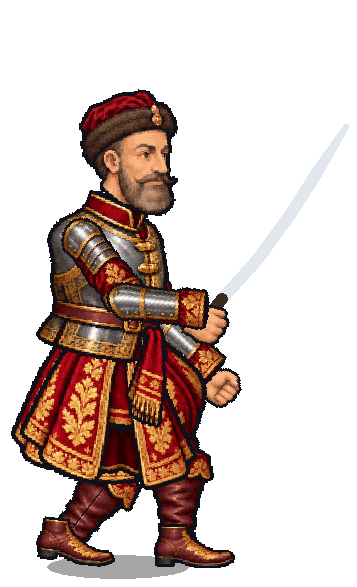
Jan Karol Chodkiewicz was Grand Hetman of Lithuania and the victor at Kircholm in 1605. In 1621 he fought at Khotyn alongside Sahaidachnyi’s Cossacks and died in camp during the defence.
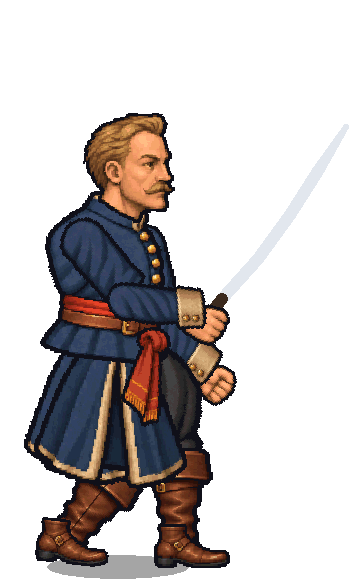
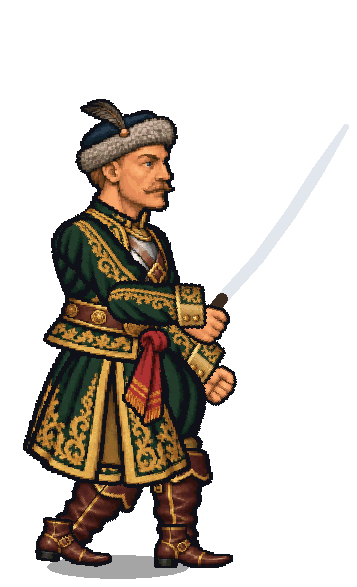
Michał Wołodyjowski is the Little Knight of Henryk Sienkiewicz’s novels, a peerless sabre fighter. This literary hero was inspired by Jerzy Wołodyjowski, who died during the defence of Kamianets in 1672.
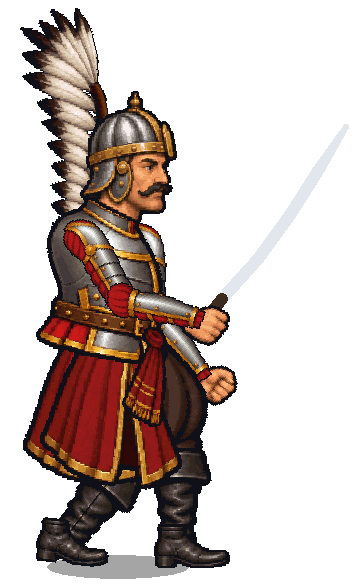
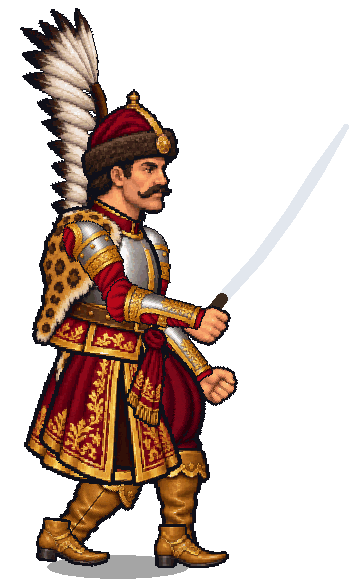
A companion of a Commonwealth hussar banner. Steel armour, feather wings and leopard skin form the hussars’ familiar silhouette. This fighter represents the formation rather than a named historical individual.
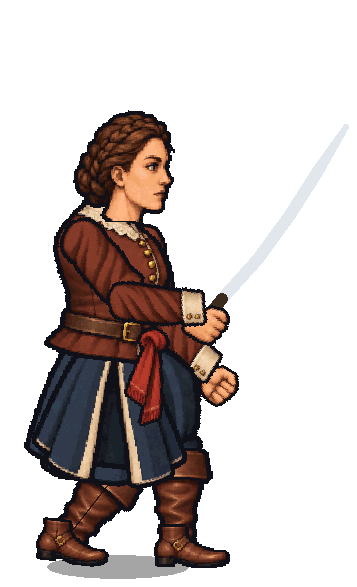
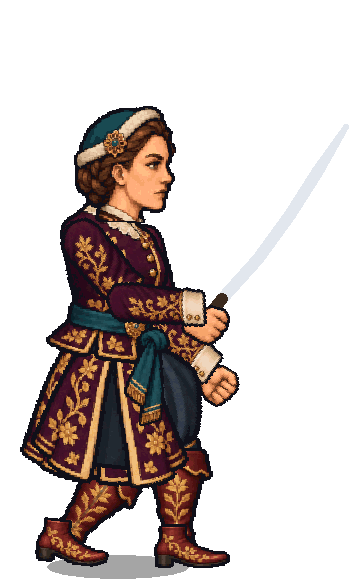
Anna Dorota Chrzanowska is remembered for the defence of Trembowla against the Ottoman army in 1675. Legend says she persuaded her husband not to surrender and joined the defence herself.
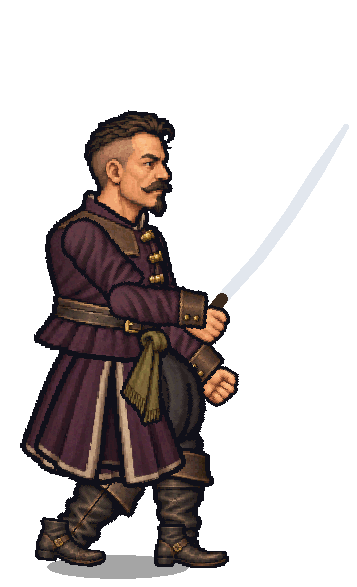
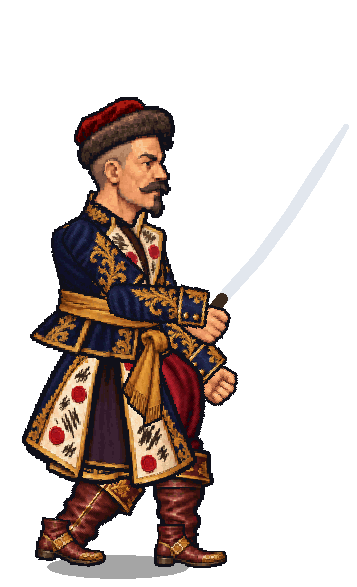
Samuel Łaszcz was a seventeenth-century officer known for military service and numerous court sentences. Legend says he lined his coat with the verdicts; that story inspires his second costume.
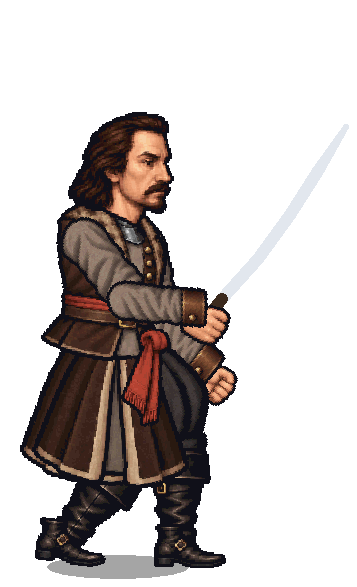
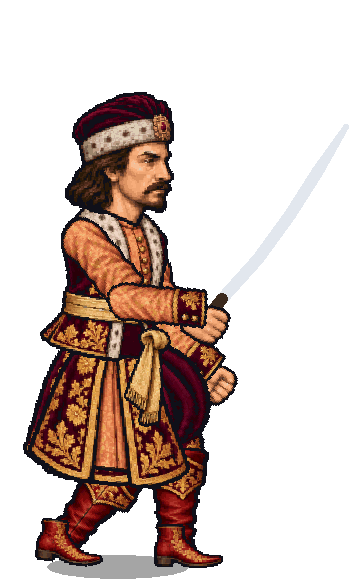
Jeremi Wiśniowiecki was a Commonwealth prince and commander who fought Bohdan Khmelnytsky during the Cossack uprising. He also appears in Henryk Sienkiewicz’s novel With Fire and Sword.
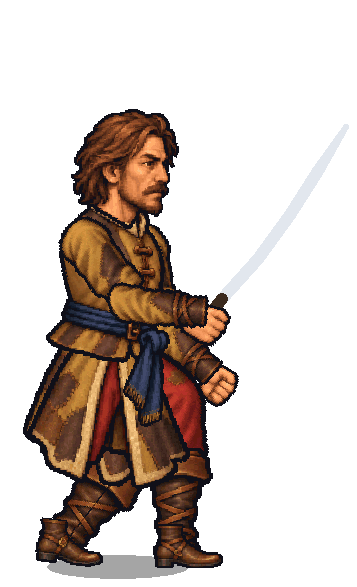
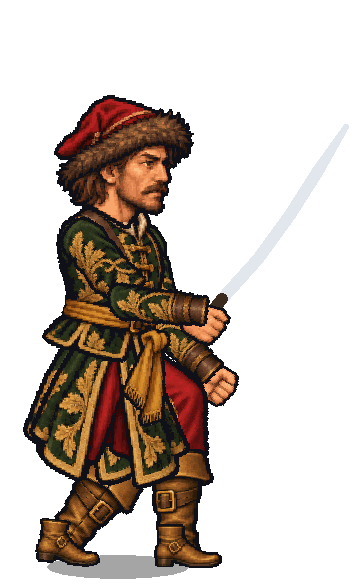
Aleksander Józef Lisowski led the light cavalry known as the Lisowczycy in the early seventeenth century. His troops made long raids and were known for their mobility and plunder. This design draws on later depictions of the formation.
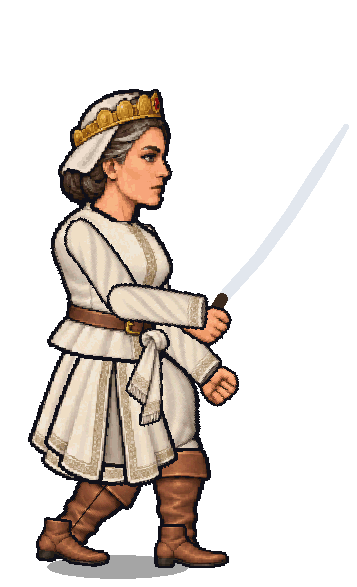
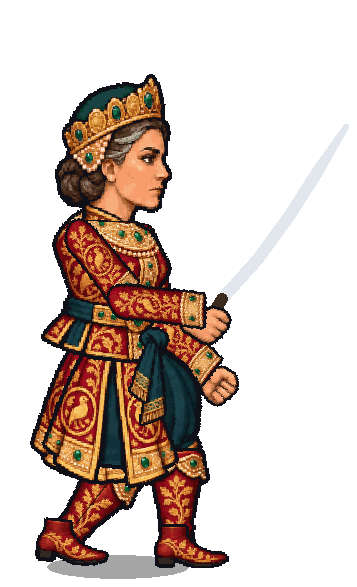
Princess Olha ruled Rus’ from Kyiv after Prince Ihor’s death while her son Sviatoslav was growing up. She reorganized tribute collection, strengthened princely authority and developed ties with Byzantium.
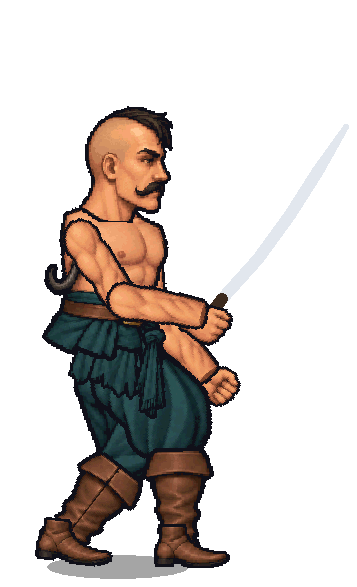
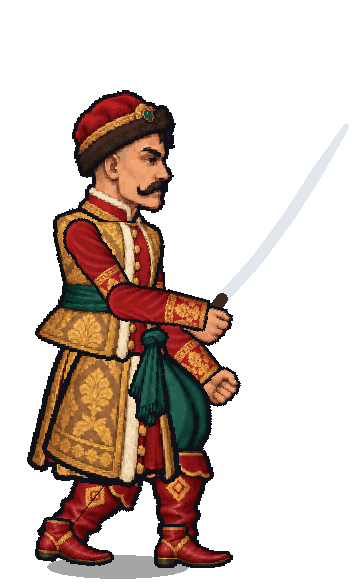
Prince Dmytro Vyshnevetskyi built a fort on Mala Khortytsia and led Cossack campaigns. Captured during the Moldavian campaign of 1563, he was executed by the Ottomans. The hook costume evokes the traditional account of Baida’s death.
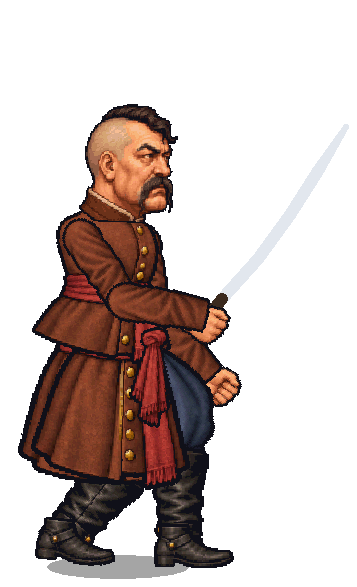
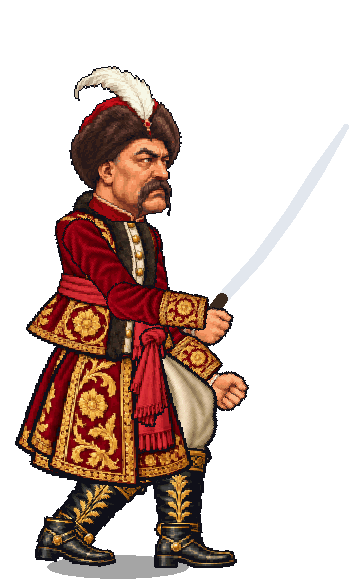
Bohdan Khmelnytskyi was hetman of the Zaporozhian Host from 1648 to 1657. He led the uprising of 1648 and the formation of the Cossack Hetmanate, combining military command with diplomacy.
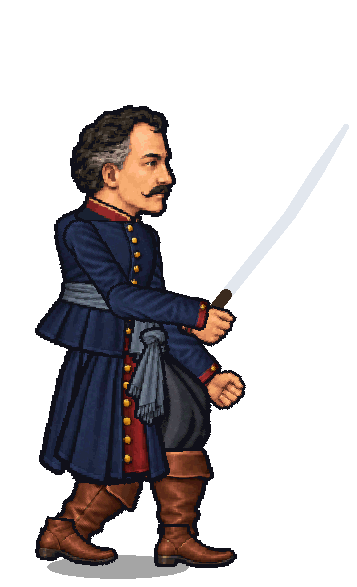
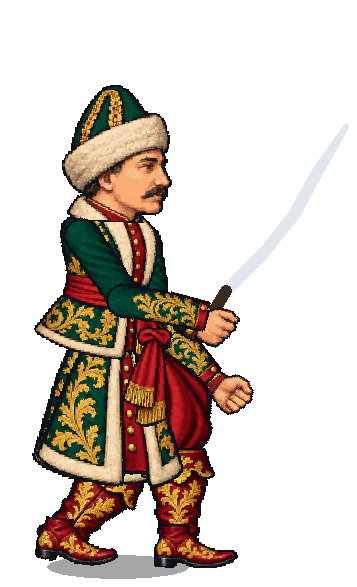
Ivan Mazepa was hetman of the Zaporozhian Host from 1687 to 1709. A diplomat and patron, he supported education, art and Ukrainian Baroque architecture. In 1708 he allied with Sweden.
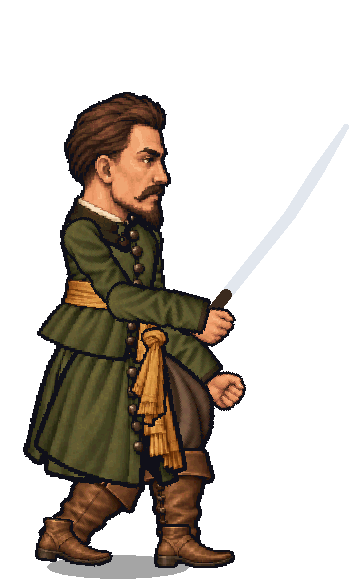
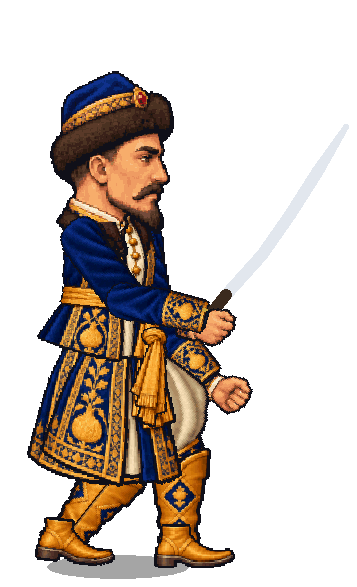
Petro Doroshenko was hetman of Right-Bank Ukraine from 1665 to 1676. A commander and diplomat, he sought to unite the Ukrainian lands on both banks of the Dnipro under one hetman.
Weapons
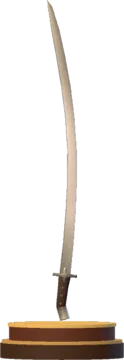
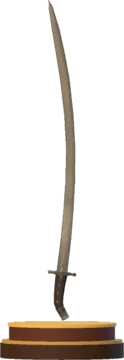
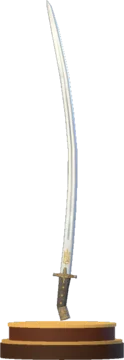
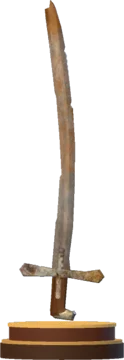
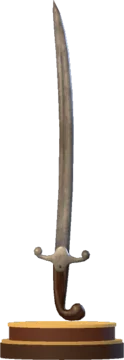
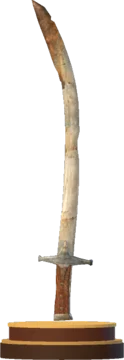
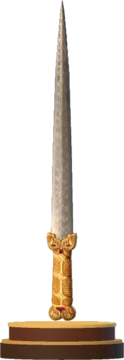
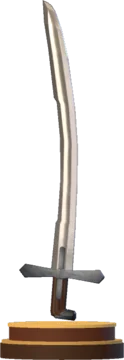
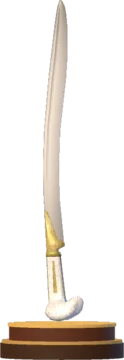
The shashka, shamshir, yataghan and chichuga each strike differently: quicker in one zone, heavier in another, a longer reach or a harder hit to the opponent's balance. Turn every blade in your hands in the armoury.
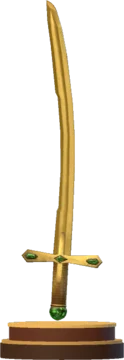
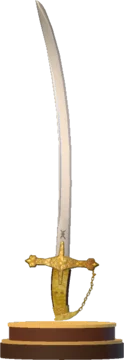
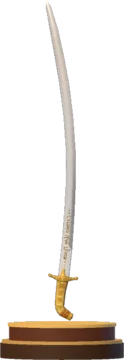
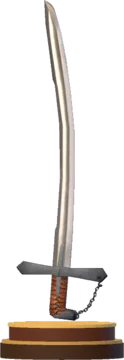
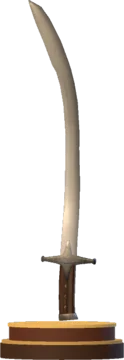

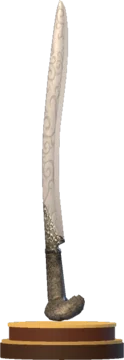
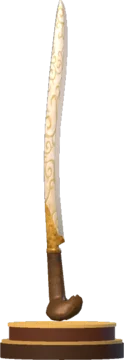
The Cossack's Path
A campaign of eight duels, from easy to hard. Climbing it unlocks combos, sabres and new heroes, each with both costumes, for free. The last rival is the crown's own hetman.
The battlefield
Cannons fire and whole regiments clash behind you while you duel at the front, and the crowd answers your hits.
Questions
SICHA (Cossack Combat) is a one-on-one sabre duel game in pixel art, set mostly in 16th–17th-century Ukraine. You fight as Cossack hetmans and colonels, Commonwealth kings and hussars, Ottoman sultans and Crimean commanders.
Android, iOS and Steam (Windows, Linux and Steam Deck). The game is in development and has no release date yet.
You attack high, mid or low, hold a guard and parry at the last moment to strike back. A balance meter punishes endless blocking. Twelve combos chain cuts, guards and steps into finishing moves.
Yes: two phones on the same Wi-Fi or hotspot can duel each other directly. The Steam version adds online duels with Steam friends.
Some heroes, weapon bundles and camps can be bought in the store you install the game from. Many heroes, sabres and all combos are won for free on the Cossack’s Path. There are no ads.
Ukrainian, English and Polish.